Columbia River Gorge Museum Guide
Columbia River Gorge Museum Guide: Art, History & Culture in the Gorge
By: Menandro Bacalangco Jr. | October 01, 2026
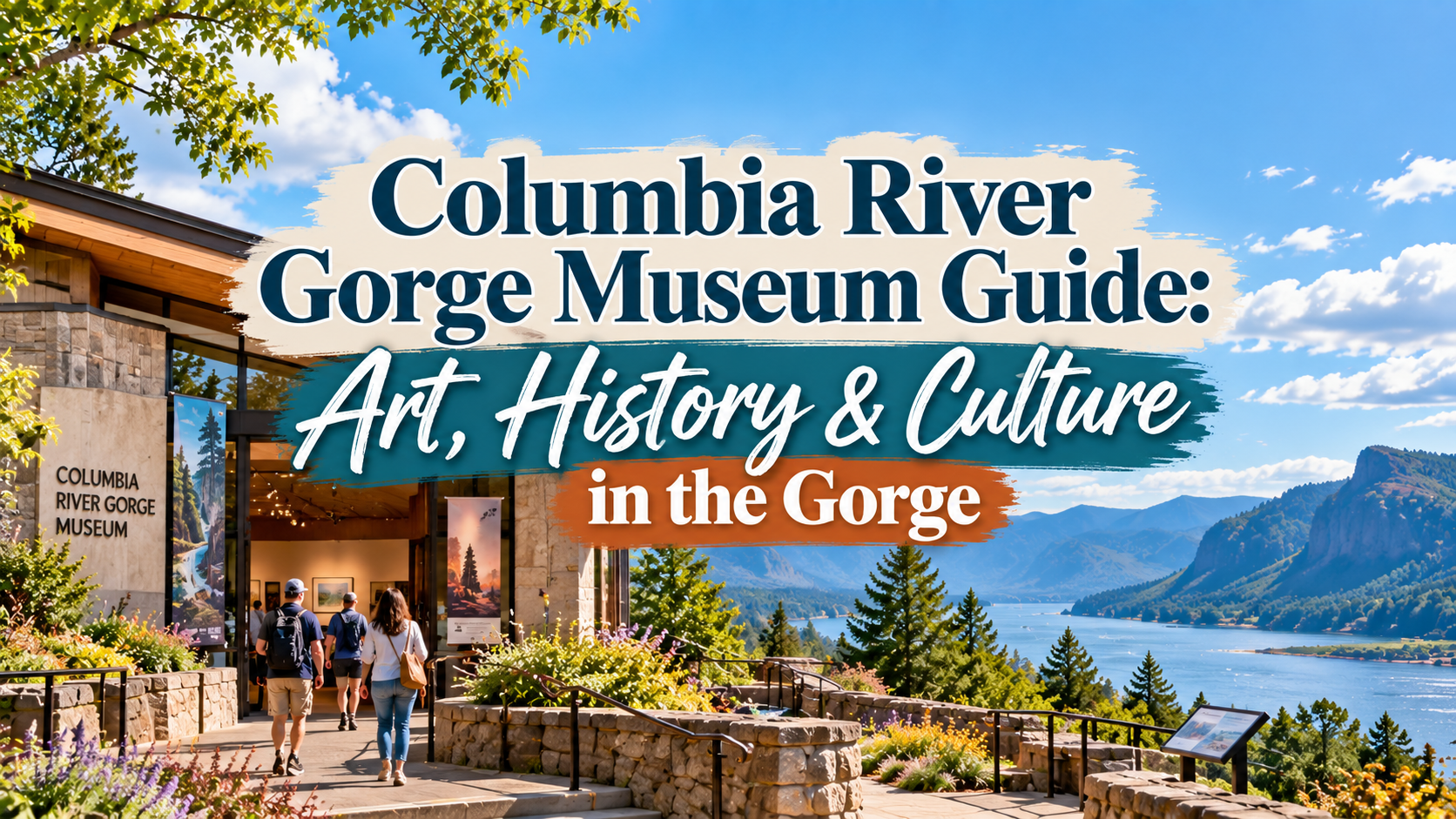
Columbia River Gorge Museum Guide | Columbia Gorge Culture
The Columbia River Gorge is known for waterfalls, forested mountains, hiking trails, and dramatic views across the Columbia River. But the Gorge is also a place shaped by Indigenous communities, early settlement, transportation, logging, fishing, industry, art, and generations of people who have lived along the river.
One of the best places to understand that deeper story is the Columbia Gorge Museum in Stevenson, Washington. The museum brings together historical objects, regional art, cultural exhibits, and changing displays that help connect the landscape outside with the people and events that shaped it.
For travelers spending time in Stevenson, the museum fits naturally alongside other things to do in Stevenson, WA. It can be part of a slower cultural day, an indoor stop between outdoor activities, or a way to better understand the Washington side of the Gorge.
Why Visit the Columbia Gorge Museum?
The Columbia Gorge Museum is one of Stevenson's most relevant cultural attractions and a useful introduction to the history of the Columbia River Gorge.
The museum connects visitors with themes such as:
- Indigenous history and culture
- Pioneer and settlement-era life
- Logging and timber history
- Columbia River transportation
- Fishing and regional industry
- Skamania County history
- Regional art and contemporary exhibitions
- Community traditions and cultural programs
Because the museum is located directly in Stevenson, it can easily fit into a day that includes time around town, dining, shopping, and nearby scenic areas.
Columbia Gorge Museum in Stevenson, Washington
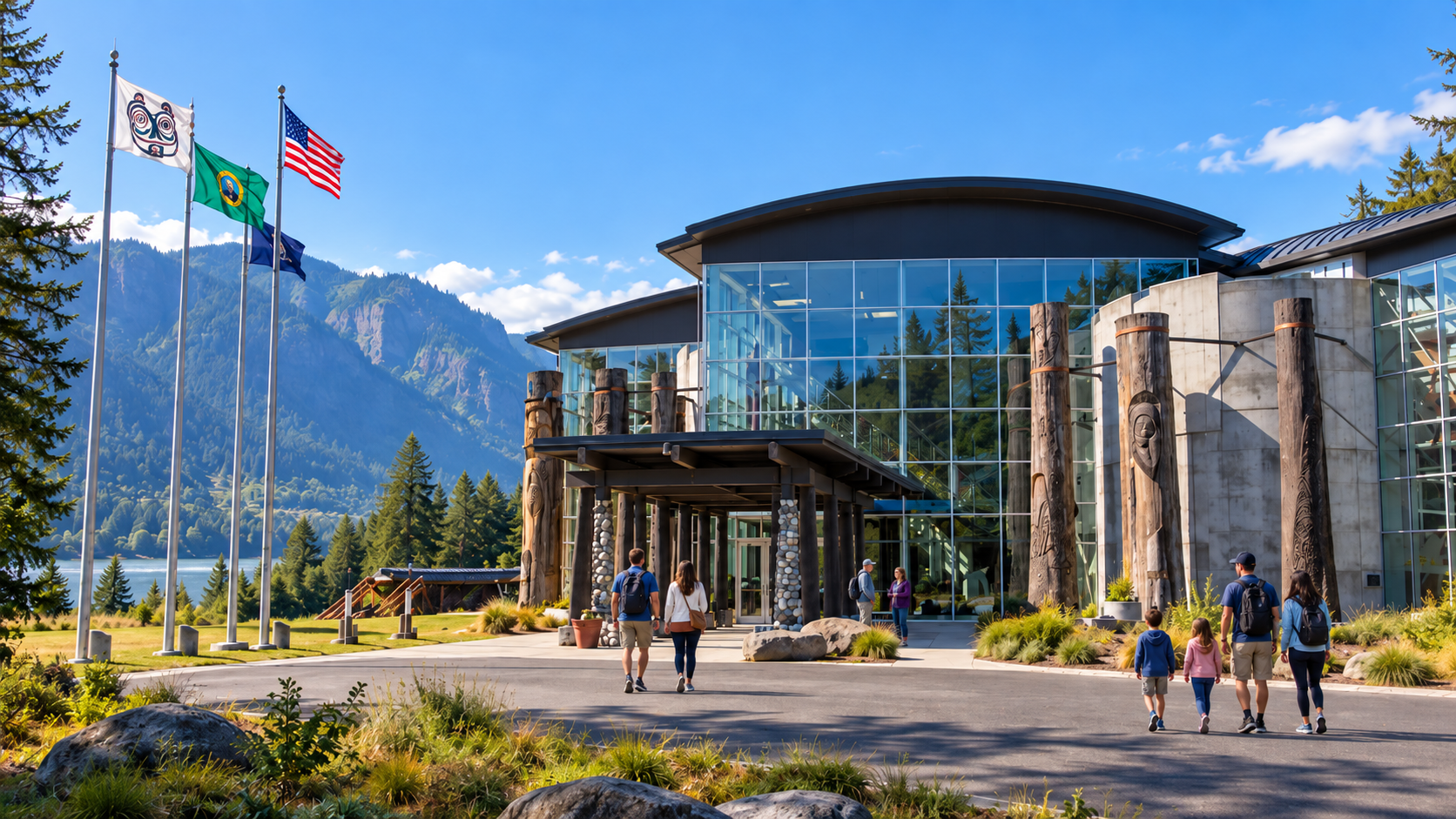
The Columbia Gorge Museum is closely tied to Stevenson and the broader history of Skamania County.
That local connection makes it especially relevant for travelers who want to understand Stevenson as more than a place to stay between outdoor adventures.
Many visitors experience the Gorge by moving between trailheads, waterfalls, viewpoints, and riverfront communities. Stevenson adds another dimension by combining outdoor access with local history, small-town culture, restaurants, shops, and regional attractions.
The museum works well with a Stevenson itinerary that includes:
- Downtown Stevenson
- Local restaurants
- Small shops and galleries
- Riverfront areas
- Scenic drives
- Hiking and waterfall trips
- Cultural attractions
For travelers unfamiliar with the town, a first-time visitor's guide to Stevenson provides additional context for how the museum fits into a broader stay.
Understanding Columbia River Gorge History
The Columbia River has influenced nearly every stage of development in this part of the Pacific Northwest.
For thousands of years, Native peoples have lived, traveled, traded, gathered, and fished throughout the region. Later periods brought settlers, timber operations, railroads, roads, river commerce, and expanding towns.
The museum helps connect several important historical themes:
- Indigenous relationships with the river
- Early exploration and settlement
- Fishing and river commerce
- Logging and timber industries
- Railroad and road development
- Community growth
- Changing cultural traditions
Seeing these stories together helps visitors understand that the Gorge is not defined by one period of history.
Its identity comes from the interaction of people, natural resources, transportation, culture, and geography.
That broader perspective is especially useful for travelers exploring why Stevenson is a natural base for the Columbia River Gorge, where the town's location provides easy access to both cultural and outdoor experiences.
Indigenous History and Culture of the Columbia River Gorge
Any meaningful discussion of Gorge history begins long before today's towns and highways.
Indigenous communities have deep connections to the Columbia River and surrounding lands, with traditions tied to fishing, trade, travel, gathering, family, and cultural practices that extend back thousands of years.
Museum exhibits can help introduce visitors to themes involving:
- Traditional fishing
- Trade along the Columbia River
- Everyday tools
- Ceremonial objects
- Relationships with the land
- Cultural traditions that continue today
The Columbia is not simply a scenic river bordered by recreational land.
It has long been a place of cultural, economic, and spiritual importance.
Understanding that history adds depth to the surrounding landscape and helps place modern recreation within a much longer human story.
Skamania County History
One of the museum's strongest local vectors is its connection to Skamania County history.
Stevenson's development is closely tied to the Columbia River, surrounding forests, timber industries, transportation routes, local families, and the growth of communities on the Washington side of the Gorge.
Important Skamania County themes include:
- River transportation
- Logging and timber
- Early settlement
- Small-town development
- Historic industries
- Local families and communities
- Stevenson's growth as a regional center
This context changes the way visitors may see Stevenson.
Rather than functioning only as a convenient location near outdoor attractions, the town becomes part of a much larger regional story.
Some of that local character is also reflected in the hidden gems around Stevenson, WA, where small-town places and lesser-known stops add another layer to the visitor experience.
Logging and Timber History
Timber played a major role in the economic development of the Pacific Northwest, and communities around the Columbia River Gorge were part of that story.
Logging supported employment, transportation systems, local businesses, and settlement throughout much of the region.
Museum displays can help visitors understand:
- How timber shaped local economies
- The challenges of logging in steep terrain
- Systems used to move logs
- Logging tools and equipment
- The daily lives of timber workers
- Traditions connected to logging communities
These stories give logging history a more human dimension.
Instead of seeing timber only as an industry, visitors can understand how it influenced families, work culture, transportation, and the development of towns throughout the Gorge.
River Transportation, Fishing, and Industry
The Columbia River was historically much more than a scenic backdrop.
It functioned as a transportation route, fishing ground, commercial resource, and economic corridor connecting communities across the Pacific Northwest.
Important themes include:
- Commercial fishing
- Riverboats and steamships
- Cargo movement
- Railroad transportation
- Timber shipping
- Trade between river communities
- Travel through difficult Gorge terrain
Understanding these subjects can change the way visitors experience the river today.
A scenic viewpoint becomes a place where it is easier to imagine generations of people, goods, timber, and fish moving along the Columbia.
That historical perspective can complement a day spent following a Columbia River Gorge waterfall itinerary, where natural scenery and regional history exist side by side.
Pioneer and Settlement History
The museum also helps preserve stories connected to later settlement in the Gorge.
Pioneer-era objects and historical displays provide insight into how new communities developed alongside much older Indigenous landscapes and transportation routes.
Visitors may encounter themes involving:
- Early households
- Everyday tools
- Local businesses
- Farming and settlement
- Community development
- Transportation changes
- The growth of towns such as Stevenson
The broader historical context is important because pioneer settlement represents one chapter in the region's story rather than its beginning.
That approach helps visitors understand how different periods of history overlap throughout the Gorge.
Art and Culture at the Columbia Gorge Museum
History is only part of the museum experience.
The Columbia Gorge Museum also serves as a cultural space where regional art, traditional crafts, photography, local stories, and changing exhibitions can be presented together.
Depending on the exhibition schedule, visitors may encounter:
- Contemporary regional art
- Photography
- Textile traditions
- Traditional crafts
- Local history displays
- Artist-focused exhibitions
- Cultural workshops and programs
This variety makes the museum relevant to travelers interested in more than historical artifacts.
It also connects Stevenson to the broader creative and cultural identity of the Columbia River Gorge National Scenic Area.
Seasonal gatherings and local culture also play a role in the town's identity, with annual events in Stevenson, WA adding another layer to the area's community character.
A Cultural Attraction on the Washington Side of the Gorge
Outdoor recreation naturally dominates many Gorge itineraries.
Visitors often come for waterfalls, forests, kayaking, mountain trails, river views, wildflowers, and scenic drives.
The museum adds a different kind of experience.
It works especially well for travelers who want to balance:
- Hiking with history
- Waterfalls with local culture
- Scenic drives with museum time
- Outdoor recreation with slower activities
- Nature-focused days with time in Stevenson
That balance fits naturally into a weekend getaway to Stevenson, WA, where museum time can sit alongside outdoor activities without taking over the entire trip.
A Rainy-Day Activity in Stevenson
Weather can change quickly in the Columbia River Gorge.
Rain, wind, cooler temperatures, and cloudy conditions are all part of traveling through the region, especially outside the peak summer months.
The museum works well when an outdoor-heavy day needs more flexibility.
A slower Stevenson day might include:
- The Columbia Gorge Museum
- Downtown shops
- Coffee or lunch
- Local galleries
- Dinner in town
- A scenic drive if weather improves
The area's shopping options in Stevenson, WA also fit naturally into this kind of indoor-focused day.
Is the Columbia Gorge Museum Good for Families?
The museum can be a useful stop for families who want a break from outdoor recreation.
Families may appreciate:
- Visual historical displays
- Large artifacts
- Regional stories
- Art exhibitions
- Indoor time during poor weather
- An activity that does not require a full day
Because the museum can be combined with other activities, it works well alongside scenic viewpoints, short walks, riverfront time, and relaxed exploration around Stevenson.
How Long Should You Spend at the Museum?
For many travelers, the museum works best as one part of a broader Stevenson day rather than an all-day attraction.
Visitors interested in the following subjects may prefer a slower pace:
- Regional history
- Indigenous culture
- Logging
- Transportation
- Local art
- Changing exhibitions
- Skamania County history
Others may use the museum as a shorter stop between town activities and outdoor sightseeing.
For travelers spending more than one night in the area, a two- or three-night Columbia River Gorge getaway leaves more room to balance museums, trails, restaurants, waterfalls, and slower time around Stevenson.
Building a Stevenson History and Culture Day
The Columbia Gorge Museum works particularly well as the anchor for a slower cultural day in Stevenson.
A simple itinerary could look like:
- Morning: Spend time around downtown Stevenson
- Late morning or afternoon: Visit the museum
- Lunch: Eat at a local restaurant
- Afternoon: Browse shops or walk near the river
- Evening: Stay in town for dinner and a relaxed evening
This type of day offers a different rhythm from an itinerary built entirely around hiking or waterfalls.
It also gives travelers more time to understand Stevenson itself rather than treating the town only as a starting point for other places.
Why the Columbia Gorge Museum Matters
The museum provides something even the best scenic viewpoint cannot: context.
After learning about logging, the surrounding forests can feel different.
After understanding transportation history, the Columbia becomes easier to picture as a working corridor rather than only a scenic river.
After encountering stories connected to Indigenous communities and regional culture, the landscape becomes connected to a much longer human history.
And after learning about Skamania County, Stevenson itself starts to feel less like a stop between attractions and more like part of the history of the Gorge.
That connection between landscape and story is what gives the museum lasting value.
Final Thoughts
The Columbia River Gorge can be experienced through waterfalls, mountain trails, scenic drives, forests, and river views, but those landscapes represent only part of the region's story.
The Columbia Gorge Museum in Stevenson adds historical and cultural context through stories connected to Indigenous communities, pioneer life, logging, transportation, Skamania County, regional art, and generations of life along the Columbia River.
Because the museum sits directly in Stevenson, it fits naturally into a trip that also includes time in town, scenic outings, restaurants, shops, and slower days between outdoor adventures.
Artbliss Hotel is also located in Stevenson, placing guests near the museum while providing a local base for experiencing both the cultural and natural sides of the Gorge.
For travelers who want more than scenery, the museum is one of the most useful places in Stevenson for understanding the history, people, and culture behind the Columbia River Gorge.
Frequently Asked Questions
What is the Columbia Gorge Museum known for?
The Columbia Gorge Museum is known for exhibits covering regional history, Indigenous culture, logging, transportation, Skamania County history, art, and life along the Columbia River.
Is the Columbia Gorge Museum in Stevenson, Washington?
Yes. The museum is located in Stevenson, making it one of the most relevant cultural attractions for travelers spending time on the Washington side of the Columbia River Gorge.
Is the Columbia Gorge Museum good for families?
Yes. Families can explore historical displays, regional stories, art exhibits, and larger artifacts while enjoying an indoor activity that can be combined with other Stevenson attractions.
What kinds of exhibits can you see at the Columbia Gorge Museum?
Exhibits may cover Indigenous history, pioneer life, logging, fishing, transportation, local communities, traditional crafts, photography, and regional art. Rotating exhibitions can change over time.
How does the museum fit into a Stevenson itinerary?
The museum works well as part of a slower day in Stevenson, especially alongside downtown shops, local restaurants, riverfront time, scenic drives, and other cultural attractions.